Reestablishment of the Jewish community in 1945
In June 1945, around fifteen former members of the community returned to Erfurt from the Theresienstadt ghetto and founded a religious community together with other survivors of the Shoah. While some soon emigrated to Israel, the congregation grew through immigration from Eastern Europe. By the end of the 1940s, the number of members had risen to several hundred.
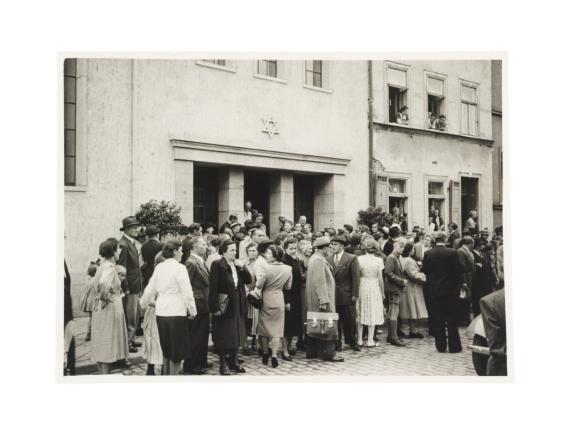
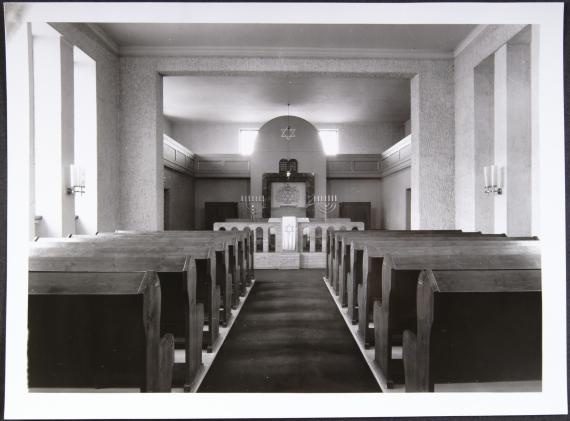
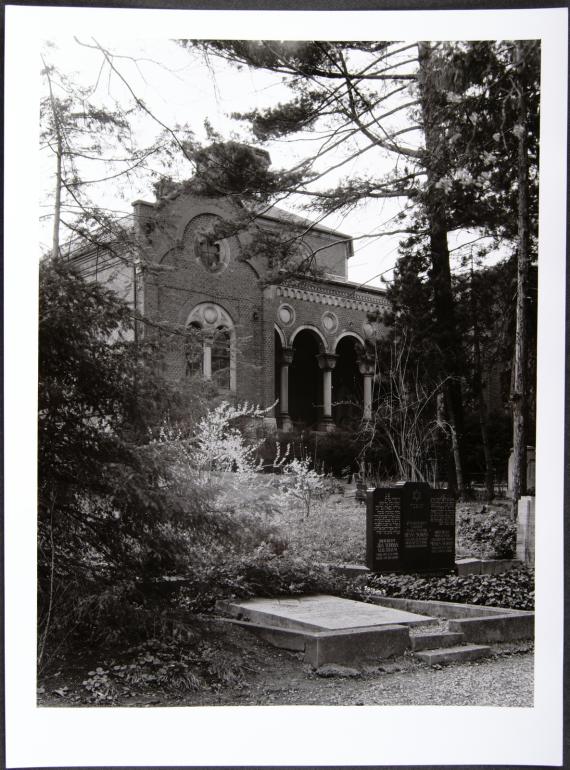
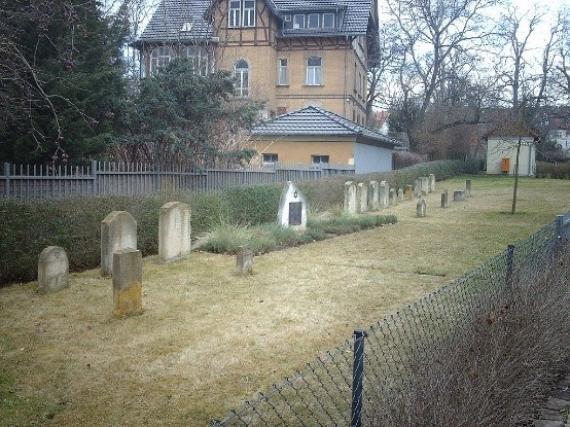
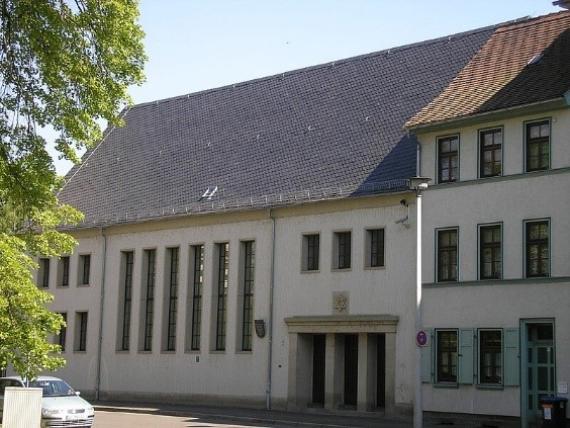
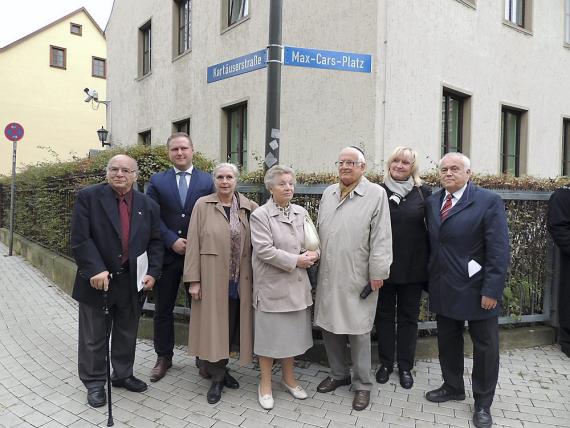
The first chairman of the post-war community for 17 years was Max Cars (1894-1961), who had already been a member of the Erfurt Jewish community before the Nazi era. Initially, community life took place in rented premises at Anger 30/32. In 1951, the new Thuringian communities of Eisenach, Gera, Jena and Mühlhausen merged to form the Thuringian state association based in Erfurt. In 1948, the Jewish community regained the old Jewish cemetery on Cyriakstraße, which had been leveled following its destruction during the November pogroms. Just three years later, they sold the plot - apparently not entirely voluntarily - back to the city, which had garages built there. The foundations of the garages consisted partly of the remains of Jewish gravestones. Although Raphael Scharf-Katz, chairman of the Jewish community at the time, made it clear in a letter how intolerable this situation was for devout Jews, the construction of a transformer house on the site of the cemetery was still approved in 1995. Today, thanks to the erection of a memorial stone in 1996 and the gravestones that have since been re-erected, the site is once again visible as a Jewish cemetery.On March 20, 1947, the Erfurt City Council decided to return the site of the Great Synagogue, which had been burned down by the National Socialists, to the Jewish community. At the same time, plans were drawn up for a new synagogue building. These were initially rejected on the grounds that the planned building would appear too "large" and "sacred" and would not blend in with the cityscape. Only a third design by architect Willy Nöckel for a tall and simple building was approved by the city in 1951. While other Jewish communities in the GDR used existing rooms or rededicated rooms for religious services, the Jewish community in Erfurt was the only Jewish community in the GDR to receive a new synagogue building in the summer of 1952.
Antisemitism & flight
Against the backdrop of the Stalinist show trial against Rudolf Slánský in Prague at the end of 1952 and fears of anti-Semitic reprisals, around two thirds of all Jews left the GDR in the early 1950s. Among them was Günter Singer, the former chairman of the Erfurt synagogue community. He had survived the Theresienstadt, Auschwitz and Birkenau camps. When he found no family members left in his native city of Breslau after the end of the war, he went to Erfurt to help rebuild the Jewish community. The warning issued by the President of the Association of Jewish Communities in the GDR, Julius Meyer, in January 1953 prompted Günter Singer and other community leaders to flee to West Berlin. Singer took up the post of cantor at the Jewish community in Hamburg in the same year.
Community structure from the 1950s
Not only Günter Singer, but many members of the congregation fled in 1953. In the following decades, the congregation also suffered from a loss of members and an ageing population. The congregations in Eisenach, Gera and Mühlhausen disbanded and Erfurt remained the only congregation in Thuringia
At the beginning of the 1960s, the leadership of the congregation in Erfurt changed: the former chairman Max Cars resigned in March 1961 for health reasons. He was succeeded by Herbert Ringer (as chairman) and Siegbert Fein (as deputy chairman) of the State Association of Jewish Communities in Thuringia. From 1962 to 1985, Ringer also held the office of Vice President of the Association of Jewish Communities in the GDR. Raphael Scharf-Katz then took over the chairmanship of the state community.
Change
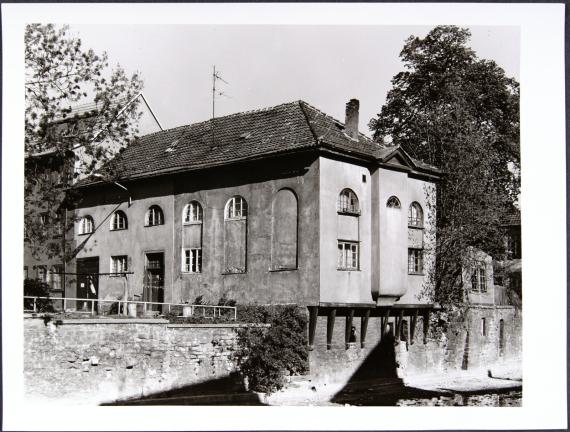
It was not until the 1990s that interest in the city's Jewish history began to grow. For example, knowledge about the original function of the building "An der Stadtmünze 4-5" as a former synagogue (converted into a residential building in 1884) returned to the public consciousness. The prayer hall, mikvah and Torah shrine of this so-called Little Synagogue were renovated. Since 1998, the site has been used as a meeting and cultural center. The Old Synagogue Museum was opened in 2009. A medieval mikvah, which was discovered during archaeological research in 2007, has been open to the public as a museum space since 2011.
Jewish life today
Since 1990, the number of Jewish residents in Erfurt has been growing, particularly due to the influx from the states of the former Soviet Union. In 2012, the Jewish community of Thuringia had over 800 members, 550 of whom live in Erfurt. Rabbi Konstantin Pal, one of the first rabbis ordained in Germany after the Second World War, came to Erfurt in fall 2010.
Add new comment