Bahnhofstraße 11
Lower Saxony
49406 Barnstorf
Germany
Alte Post
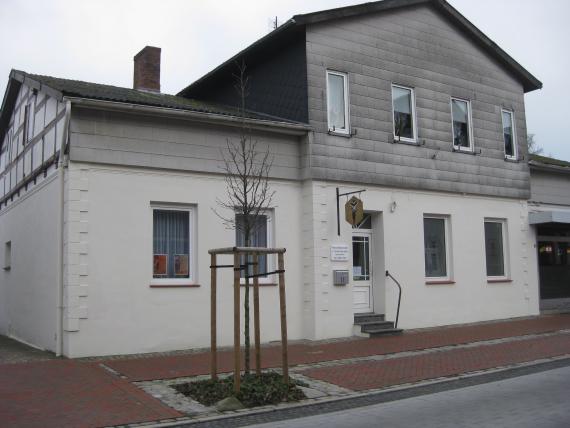
The Gärtner family lived in Barnstorf from 1910, most recently at Bahnhofstra<e 139, the house we are standing in front of. Before they moved in here, they lived with the Wesermann family for some time.
In Barnstorf, Max Gärtner was a respected cattle dealer, just like his father and his brother. He owned a plot of land with stables; he also had a lot of grazing land in the community. Max Gärtner preferred to trade in large livestock: he bought the cattle in the surrounding area and sold them in Osnabrück and Dortmund.
After the seizure of power in 1933, business slowed down considerably. In 1937, the company was banned from trading and thus went out of business. As a result of the Nuremberg Race Laws, the emigration of Jews to Holland and the USA increased even more, so that in 1935 there were still 10 Jews registered in Barnstorf.
During the Reich Pogrom Night from 9 to 10 November 1938, there were also riots against the Gärtner family in Barnstorf.
Walter Gärtner, the second son, went to Bremen immediately after leaving school. He did an apprenticeship as a bank clerk there. He lived there, except at weekends, when he stayed with his parents in Barnstorf.
Walter Gärtner managed to emigrate to the USA on August 20, 1938 on the ship „Westerland“. He reached America on August 30, 1938. As he was able to travel as a first-class passenger, he did not have to enter the country via the Ellis Island immigration station. The HIAS organization supported him and made it possible for him to leave the country. HIAS stands for Hebrew Immigrant Aid Society.
In the end, all members of the Gärtner family still living in Barnstorf had to move to Bremen, where they lived at Kaufmannsmühlenkamp 5. All the Jews in the area were housed in Kaufmannsmühlenkamp for a short time, as if in a ghetto. They were all eventually arrested there, deported to Minsk and murdered on July 28, 1942.
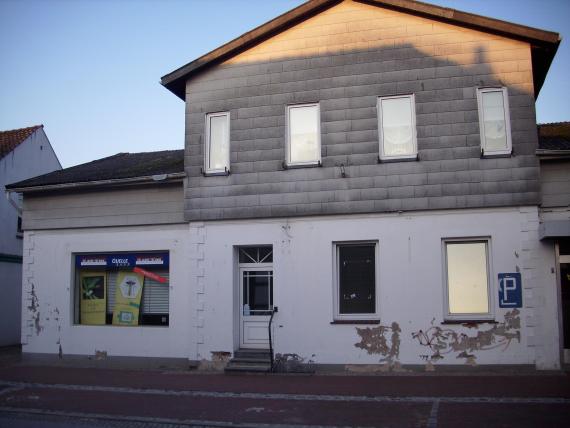
The Gärtner family only moved into the house in 1929. Before that, they lived in Lange Straße or temporarily with the Wesermann family across the street until they were able to move in. The house in Bahnhofstraße housed the old post office at the time.
The family of Jenny, née Goldschmidt, and Max Gärtner belonged to the Jewish family who last lived at Bahnhofstraße 11 in Barnstorf, where the Stolpersteine were also laid in 2010. Max Gärtner was a respected cattle dealer in Barnstorf. The family also included three sons, Herbert (born in 1911), Walter (born in 1912) and Otto (born in 1914). Herbert Gärtner left Barnstorf for a short time in 1939 and returned after his marriage. Otto Gärtner, the youngest, was in poor health, unmarried and remained a resident of Barnstorf. According to the Diepholz district gazette, Max Gärtner gave up his residence in Barnstorf in 1939. All members of the family were deported to Bremen, to the so-called "Jews' house", where Stolpersteine were also laid. They commemorate the fact that the family was housed there until they were deported to Minsk. They were murdered in Minsk on July 28, 1942.
Max Gärtner was a respected cattle dealer in Barnstorf, just like his father and brother. He owned a house with stables; he also had a lot of pasture land in the community. Max Gärtner preferred to trade in large cattle: he bought cattle in the surrounding area and sold them in Osnabrück and Dortmund.
After the seizure of power in 1933, business slowed down considerably. In 1937, the trade was banned and the business closed down. As a result of the Nuremberg Race Laws, the emigration of Jews to Holland and the USA increased even more, so that in 1935 there were still 10 Jews registered in Barnstorf.
During the Reich Pogrom Night from November 9 to 10, 1938, there were riots in Barnstorf, including against the Gärtner family.
Walter Gärtner, the second son, went to Bremen immediately after leaving school. He did an apprenticeship as a bank clerk there. He lived there, except at weekends, when he stayed with his parents in Barnstorf.
Walter Gärtner managed to emigrate to the USA on August 20, 1938 on the ship "Westerland". He reached America on August 30, 1938. As he was able to travel as a first-class passenger, he did not have to enter the country via the Ellis Island immigration station. The HIAS organization supported him and made it possible for him to leave the country. HIAS stands for Hebrew Immigrant Aid Society.
In the end, all members of the Gärtner family still living in Barnstorf had to move to Bremen, where they lived at Kaufmannsmühlenkamp 5. All the Jews in the area were housed in Kaufmannsmühlenkamp for a short time, as if in a ghetto. They were all eventually arrested there, deported to Minsk and murdered on July 28, 1942.

Add new comment